


There were many worthy albums in 1990 that didn’t make my Year in Review playlist. Let’s take a peek at some of the most significant.
Further Listening, Most Overrated, and More….
All release dates from Wikipedia, unless otherwise noted.
The Most Overrated Albums and Biggest Disappointments of 1990
 Ice Cube
AmeriKKKas Most Wanted
 Ice Cube
Released 1990/05/16
I bought Ice Cube’s AmeriKKKas Most Wanted at the time it was released, or perhaps a little after, but never really got into it that much. I probably had high expectations for it, having spent countless hours absorbing Straight Outta Compton a couple years before.
When I listen to it now, I feel a bit of the same sense of blah. Much of the album feels angry and loud and abrasive without being particularly interesting or compelling. That reaction should be no surprise from me these days—I mean, I’m an old fart now, basically. Sign me up for the next Neil Diamond sing-a-long. But back then I liked stuff loud and abrasive by instinct, and it didn’t do much for me then, either.
The album is worth the listen, certainly, even if just to hear Ice Cube tackle racial injustice in its various forms. Ice Cube stages his own execution at the electric chair, laments the fatality rate of black men, critiques pimps and other shady characters, slams contemporary radio, tells a little tale about a date gone wrong before it can even start, and in general shows why he’s “The Ni**a Ya Love to Hate.”
The misogyny is pretty awful, though, even by gangsta rap standards—the duet “It’s a Man’s World” with female rapper Yo-Yo does little more than add sexist trash-talk from the other side to the mix—although at least it ends in a relative tie.
I remember some of the talk of the time was that in NWA, Eazy-E would stand over Ice Cube’s shoulder as he wrote the lyrics, pathetically pleading, “Make me sound tougher!” We were a little scornful of Eazy, back then, even though we liked his stuff. Yet Eazy-E’s high-pitched, nasally whine has far more charisma than the shouting and heavy chest-beating on display here. In retrospect, Cube sounds much louder, in fact, than he does tough. I mean, he’s way tougher than me, but that’s not saying much.
Ice Cube was clearly the lyrical creative force behind N.W.A., but Eazy was the better rapper. And when Chuck D makes a guest appearance in “Endangered Species,” it’s clear who has the more authoritative voice. Ditto with Cube’s duet with Yo-Yo.
As far as angry, political gangsta rap goes, I’d skip AmeriKKKas Most Wanted and wait for 1991’s O.G. Original Gangsta. The T raps the street far more convincingly than the Cube. (Cube was pretty great in Boyz n the Hood, though, it must be said.)
The Chills
Submarine Bells
 The Chills
Released 1990
There seems to be a subset of indie-rock critics who revere the Chills’ Submarine Bells with a fervor. Having now listened to it repeatedly, I don’t seem to get what they see in it. I mean, it’s not a bad album, by any means. But I don’t see anything brilliant or particularly inspiring about it. I can’t quite put my finger on it exactly, but there’s something somehow muted or restrained about the compositions that dampens their potential pop glory. It feels a bit muddled—possibly that’s what some folks love so much about it.
Decent, but not at all as remarkable as some seem to find it. Damned cool cover, though, especially when you consider the album title.
Pixies
Bossanova
 Pixies
Released 1990/08/13
The Pixies’ Bossanova was a huge disappointment for me. I had loved their debut Come On Pilgrim EP and first two albums, Surfer Rosa and Doolittle, each of which showed a development and shift in sound—the lo-fi punkiness of Pilgrim, then the full-out aural assault of the terrific Surfer Rosa, and the subsequent development of their sound in a more varied goth and post-punk direction with Doolittle.
But Bossanova was just like the old stuff, watered down, more palatable, more blah. Worse, the interplay between Black Francis and Kim Deal seemed to have almost completely disappeared. Luckily for me, I discovered the Breeders terrific debut album around the same time, and got my groove back.
Thanks to the absolute lameness of this outing, I didn’t even bother with Trompe le Monde when it came out, which was too bad, as it is was somewhat of a return to form, at least sonically (even less Kim Deal, though).
I was absolutely shocked, in retrospect, to discover this album rated so highly in so many sources. It’s easily their least essential album—in retrospect, it’s a Pixies album for people who just don’t really like the Pixies. If the harder, darker edge to the earlier Pixies albums is too much for you, you’re better off with Frank Black’s solo stuff, which is more successful along these lines.
Codeine
Frigid Stars LP
 Codeine
Released 1990/08
Slow, plodding, rather characterless—these are not qualities you’d ordinarily associate with a band that is known as a leading light in any particular musical genre. But when the genre in question is slowcore, those qualities just might be what it’s all about.
A few musical genres developed in the ‘90s as a counterpoint to the prevailing alt-rock scene, which in and of themselves don’t seem to me to be particularly notable, yet added some richness to the overall musical tapestry of the time. I’m talking about slowcore and post-rock, both of which had some moments of brilliance but could be a bit tedious in larger doses. Slow-core in particular could be a bit, well, slow. For my money, Low’s I Could Live in Hope and Godspeed You! Black Emperor’s Slow Riot for New Zero Kanada [EP] are the finest examples of each genre. (Some might understandably prefer Slint or Mogwai to represent post-rock.)
Codeine was a pioneer in what became slowcore. Codeine brings more dynamics to the mix relative to others in the genre, and when they get loud, the sounds feels a bit post-rock, too (so maybe they were pioneers there, as well); but despite a few songs that grab my attention, most of the time this music fades into the background fairly quickly. Avoiding hooks, brisk tempos, and catchy lyrics isn’t really much of a recipe for greatness, unless you’ve got something else really special.
Where Codeine seems least effective to me is in the vocals. Stephen Immerwahr’s voice isn’t necessarily bad, only fairly characterless. His voice lacks the melancholy whine of Red House Painters’ Mark Kozelek, nor does Codeine have Low’s combination of Alan Sparhawk’s quiet desperation and Mimi Parker’s stirring beauty. The term slowcore is often used interchangeably with sadcore, but to me the guys in Codeine sound more bored than sad.
Drummer Chris Brokaw would later achieve better artistic success with the band Come, which used many of the same musical techniques, but whose vocalist Thalia Zedek had an arresting, raspy voice that was difficult to ignore. Plus, they could crank up the tempo when they wanted. Brokaw also was one of the first people to encourage Liz Phair, and helped spread the word with bootlegs recordings of her Girly Sound tapes.
Pet Shop Boys
Behaviour.
 Pet Shop Boys
Released 1990/10/22
I’d like to say that I liked the Pet Shop Boys’ Behaviour better, because I can clearly see intelligence and wit behind it all. All the songs are well-constructed, and a quick scan of the lyrics shows them to be articulate and crafted. But it’s just not my style.
The edge here is all in the lyrics, and a superficial guy like me needs a little edge in the sound for me to want to listen to the lyrics much at all. This here is techno-pop light, and I want something that at least gives a hint that it might make my ears bleed, or at least ooze a little pus.
Are the Pet Shop Boys the Steely Dan of the techno set, crafting seemingly innocuous, immaculately crafted synth-pop ditties that reveal their barbs upon further listening? Perhaps. But the Pet Shop Boys tend to gently poke fun at everyday human foibles, whereas Steely Dan was outright perverse and at times devious. More edge, more subversive thrill. Pet Shop Boys’ protagonists are yuppie types (not unlike me, in many ways), whereas Steely Dan often featured seedy characters from society’s underbelly (more living vicariously for me, when I listen).
I do love some of their song titles—“This Must Be The Place I Waited Years To Leave,” “Being Boring,” etc.—but I often like the titles more than the songs themselves. Shouldn’t a song about not being boring have music that is a little less, well, kind of boring? Maybe there’s an irony (or subtlety) there I’m not appreciating.
I feel the Pet Shop Boys is mostly a great singles band, honestly. True fans will of course want their first five albums, which have earned rave reviews from many sources. For me, with the exception of a stray album track or two, I’d be happy skipping the individual discs and jumping for the singles compilation, Discography.
Nusrat Fateh Ali Khan
Mustt Mustt
 Nusrat Fateh Ali Khan
Released 1990/11/12
I picked up Nusrat Fateh Ali Khan’s Mustt Mustt during a concentrated effort in the late-‘90s to search out more world music. It’s fine, but not overly impressive—a very Westernized version of his music. I had another one called The Supreme Collection that was more of the real deal, which for me makes it more worthwhile. I mean, why settle for world music lite when you can pick up the strong stuff, instead?
Royal Trux
Twin Infinitives
 Royal Trux
Released 1990/12/15
Royal Trux’ Twin Infinitives gets tons of props from the alt-rock press.
I do like some Royal Trux, but this just feels like noise to me, deconstruction for its own sake, as opposed to building something new. I went through a fairly heavy Trux-listening period at one point, but this one never stuck with me. I knew many claimed it was their best, but couldn’t get into it. Give me Cats and Dogs over this any day.
Further Listening
For the time being, I’ll be doing my further listening for the ‘90s differently than previous decades. For the ‘60s and ‘70s, I pretty much had all playlists for each decade already completed before I made a single post on this sight. Aside from some additional listening and revisions, mostly what has taken up my time has been writing the posts. But for the ‘80s and ‘90s, I’m pretty much putting everything together as I go. So until I’ve progressed much further in the decade, I won’t be compiling the further listening by genre. Instead, I’ll simply present a further listening playlist for each year, presented chronologically. You’ll find it at the bottom of this post.
Quick Takes, and occasional extended musings
Quick takes are just that—short opinions I’ve tossed off as I listen, and polish up just a bit for posting. Only sometimes those quick takes expand into lengthier commentary.
Some of the albums will be featured on the further listening playlists, some on the singles playlist, others not at all. All albums are listed roughly chronologically, unless I elect to group a few releases together for my own mysterious purposes (all release dates from Wikipedia, unless otherwise noted).
All album art from Wikipedia, Fair use, unless otherwise noted.
Carter the Unstoppable Sex Machine
101 Damnations
 Carter the Unstoppable Sex Machine
Released 1990/01/15
Brash, obnoxious, bitter and sarcastic—I love the sensibility in Carter the Unstoppable Sex Machine’s 101 Damnations. The biting social and political commentary, filled with British references, makes it a bit obtuse for me, typical American ignoramus that I am. But the spirit comes across loud and clear in the snarled and ranted lyrics, the punk guitar attack and faux-fanfare synths, the overall brazen theatricality of it all. And the bitter, cynical tales of life in the run-down neighborhoods of London speak volumes. Their empathy for the downtrodden and down-and-out is clear.
But as much as I want to love this, I don’t really enjoy listening to it much. I’m quite glad it exists, though. The world needs more rebels with a cause like these guys.
They Might Be Giants
Flood
 They Might Be Giants
Released 1990/01/15
It’s that same old story, really: Weaker than their first two brilliant albums, probably not as good as their next (Apollo 18). But with more, bigger hits. So Flood is the album everybody knows.
Midnight Oil
Blue Sky Mining
 Midnight Oil
Released 1990/02/09
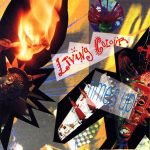
Living Colour
Time’s Up
Released 1990/08/28
There are some cultural critics who insist that every action is a political one, that there is no separating the political from the personal. That may certainly be so. But in my art I at least want the political disguised a little bit. For example, it’s the characters in a novel I care about before any social commentary the author might make about their situation. (Richard Powers’ excellent The Overstory, for example, makes you feel the way his characters do first, before you appreciate their—at times quite radical—political context.) Besides, I feel an artist should be asking more questions than preaching ideas.
And in song, it’s not enough to write intelligent lyrics about politics; you have to make the listener feel them. Dylan, for example, could write with such vitriol that I feel like I’m right there beside him, standing over the graves of warmongers, making sure that they’re dead. When I listen to Public Enemy, I get all fired up, ready to bust out of prison, light the match that sets Hollywood ablaze, and sock it to the man—even though, from a racial perspective, at least, I am the man.
Midnight Oil’s Blue Sky Mining and Living Colour’s Time’s Up, both entirely political at heart, run the risk of being more thought-provoking than inspiring. As a whole, Midnight Oil does a better job of sweeping me in with their catchy tunes and sing-along choruses. The funk-rock fusion of Living Colour is less melodic, less engaging.
I feel my tastes in funk rock have been spoiled somewhat by Prince. (I’d add Funkadelic, too, but I didn’t really know their stuff back in the late ‘80s and early ‘90s, when Living Colour was in their heyday.) I mean, if funk isn’t sexy or funny, or at least fun, why should I listen to it? Who took the fun out of funk? Am I wrong for liking Digital Underground’s ridiculous Sex Packets more than the serious jams from Living Colour?
I feel I’m probably opening myself up for accusations of racism here—he only likes black people if they’re funny, etc.—only I’m equally ambivalent toward Red Hot Chili Peppers when they aren’t funny or melodic, as well. Does the fact that I like the best songs off Paul Simon’s Rhythm of the Saints better than “Solace of You” mean I only appreciate African music when it’s appropriated and colonized by a white man? Maybe. In my defense, I like Fela Kuti better than either Simon or Living Colour.
Regardless, I want to like both these albums more than I actually do like them. I’m perfectly content, in fact, with the three songs I’ve chosen to represent them, and nothing more.
You’ll find them both on my further listening playlists.
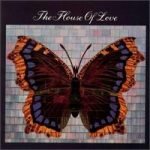
The House of Love
The House of Love
Released 1990/02/26
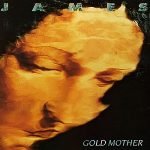
James
Gold Mother
Released 1990/06/04
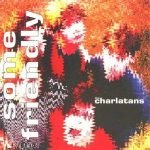
The Charlatans
Some Friendly
Released 1990/10/08
What is it with lethargic, bored British vocals, anyway? The turn-of-the-decade UK music scene was absolutely stocked with vocalists who seem half catatonic. The Madchester folks sound bored, the shoegaze crowd sounds bored, I get bored just thinking about it. How on earth did such boring singing become the rage at that time and place? Was it something in the water?
These three album—the House of Love’s (second) self-titled album, the Charlatans’ Some Friendly, and James’s Gold Mother—are all pretty good. Many listeners with what I might consider “good taste” might even love them. They seem to have all been highly rated by the British press. I like each one of them, up to a point.
But they don’t thrill me the way I want to be thrilled. I don’t notice much artistic risk in the composition, feel no sense of danger as a listening experience. It all feels very composed and controlled, very safe. At times the songs let loose a little, but in familiar ways; as a whole, the music feels constrained.
And part of the this is due to the relatively ho-hum vocals. Not only is there not much emotion in the delivery, but there’s an excessive use of multi-tracked or group singing, which I often find soothing but rarely compelling. (I am reminded of the Byrds, whose tandem singing can be a bit of a snooze at times.)
I get the idea, I guess: if you’re into it, the restraint can be good. The listener has to make up for what’s not expressed and in theory could feel the emotion more strongly. But I’m not up for that kind of subtlety. Better to be understated than to overact, so they say—and for film I’d tend to agree. But this is rock and roll, folks, not My Dinner with Andre. Give me Mick Jagger’s swagger and snarl over this mellow, choirboy, easy listening rock, any day.
The House of Love’s gentle, lilting “Beatles and the Stones” is quite nice—I feel I hear the antecedents of Oasis’s “Wonderwall” in its boyish charm. And there are a few other songs on the album that I quite like, pleasant listens in the style of a nice cup of not-too-strong tea.
James aims for soaring, stadium-rock grandeur, and flies too close to mediocrity. Since when does a song titled “Lose Control” feel so, well, reasonable? I know James mostly for the 1993 song “Laid,” which is infectiously catchy and positively oozes personality, unlike most of Gold Mother.
An electronic beat gives the Charlatans’ music some genuine propulsion—it almost sounds a little funky here and there—quite nice! Here, too, the vocals sound a bit tired, but there’s just enough life in the music to recommend it. Listen to them on my Year in Review playlist.
Nick Cave & The Bad Seeds
The Good Son
 Nick Cave & The Bad Seeds
Released 1990/04/17
The Good Son boasts a few terrific tracks (my favorites, the “Weeping” and “Hammer” songs), but it’s mostly forgettable, compared to the best of Nick Cave’s work. A pretty good Cave album, but not a great one. (And there are enough of those to justify letting this one pass.)
Mark Lanegan
The Winding Sheet
 Mark Lanegan
Released 1990/05/01
There’s something special about the way Mark Lanegan can take a vocal melody, turn it his hands this way and that, and study it carefully so that he can position it to end it with just the right touch of ache and world-weary resignation.
I’m aware that it’s become a rock-critic cliché to use the words “world-weary” when writing about Mark Lanegan—and probably “resignation” too—but t just fits. Some things become cliché for a reason.
The Winding Sheet is an early work from Lanegan, before his band the Screaming Trees saw nationwide success, long before he established a name as a solo artist. But he had the raw materials of his later achievements even then, and there are a handful of cuts here that show off his strengths quite well—one of them, “Down in the Dark,” a duet with Kurt Cobain, who also had yet to hit it big.
I didn’t include that track here, as there were three others I liked better, nor did I include another Cobain connection—a cover of “Where Did You Sleep Last Night,” which Nirvana would later cover, too, on their Unplugged album.
Concrete Blonde
Bloodletting
 Concrete Blonde
Released 1990/05/15
I had never listened to Concrete Blonde until now. They sound a lot like the stuff that nowadays passes for contemporary alternative rock on contemporary alternative rock radio (the little I know about it), which is so far removed from what to me is genuinely alternative rock that it may as well be from another universe. Of course, 1990 was before alternative rock was even called that, and before it broke into the mainstream consciousness. So let’s call Concrete Blonde unwitting trailblazers, then.
Anyway, I’ll take contemporary alt-rock over ‘80s Heart any day—and Heart was who I had always thought sung “Joey,” the big hit from Concrete Blonde’s Bloodletting. I hear the lyrics to “Joey” are better than Heart’s, but I hardly paid enough attention to “Joey” or Heart back then to notice the difference, only hearing them both in passing. Listening to “Joey” more now, I confirm that back then it would most likely have been the best Heart song in over a decade. The album has other nice mainstream-alt-style highlights, most notably “Bloodletting (The Vampire Song),” and lead singer Johnette Napolitano exudes charisma and confidence. Worth several listens, I’d say.
Bob Mould
Black Sheets of Rain
 Bob Mould
Released 1990/05
There are some good songs on Black Sheets of Rain (I especially like “Stop Your Crying”), but it’s a bit of a grind making it all the way through the album. Bob Mould does dabble in the kind of alt-pop sound he would perfect with Sugar in songs like “It’s Too Late,” which makes this release noteworthy for students of Mould’s musical progression.
Tim Buckley
Dream Letter: Live in London 1968
 Tim Buckley
Released 1990/05
I’m not normally a champion of understatement, but I would maintain that Tim Buckley’s best albums are those in which he reigns in his emotions and plays it pretty straight-up—the gentle Blue Afternoon and the riotous, grooving Greeting from L.A. Elsewhere, his work is plagued by excess. Sure, it’s impressive what he can do with his voice; but virtuosity and quality aren’t the same thing. Sometimes it’s better to play it contained.
When a character in a film experiences a great sorrow and it registers on their face with a slight quiver of the lip and a glistening of the beginnings of a tear in the corner of the eye, the audience feels their pain and compensates by bawling their eyes out. When the actor (or director, perhaps) decide to unleash the floodgates, it leaves many a viewer (like me, at least) ambivalent.
(I am aware that I seem to be contradicting what I say elsewhere in this post about James and the House of Love albums, so you may choose to take this criticism with a grain of salt.)
Dream Letter: Live in London 1968, captures Buckley live in the early stages of his career, and has become a fan favorite. It’s good, but won’t win you over if you already aren’t a convert.
There are some good renditions here, most notably of “Buzzing Fly”—one of his very best early tracks—and “Once I Was.” I think I even prefer the rendition of “Morning Glory” here to the studio version. But Buckley’s covers make me yearn for the originals. Fred Neil and the Supremes sing their songs with straight-up confidence, and the results are affecting; Buckley overplays the emotion and for me at least it falls flat.
On the whole, Dream Letter is a good summary of the early part of his career, but hardly essential for non-Buckley devotees.
Soul II Soul
Vol. II – 1990, A New Decade
 Soul II Soul
Released 1990/05/21
Could this have been anything but a disappointment? I loved Keep on Movin’ (original UK title, Club Classic, Vol. One), played it over and over. The female vocalists—Caron Wheeler, Rose Windross, Do’Reen—were the most obvious standouts. But what somehow completed the picture and made it whole were the tossed-off, deep monotone raps from Jazzie B.
Yet somehow even then Soul II Soul felt like a one-shot thing, daringly close to cheese, yet getting the touch just right in a way they were unlikely to achieve again. There are a few good tracks on this, their follow-up, but that fragile magic mostly eluded them.
Pavement
Demolition Plot J-7 EP
 Pavement
Released 1990/06/01
The least significant of Pavement’s early EPs, Demolition Plot J-7 is for fans only. “Internal K-Dart” is pretty great, though.
Dead Can Dance
Aion
 Dead Can Dance
Released 1990/06/11
A part of me is thoroughly bewitched by Dead Can Dance, even though I am well aware they are an enormously silly band posing as a medieval goth act. Aion is perhaps their most solid overall effort, although I’d say the high points from The Serpent’s Egg and Into the Labyrinth are more essential (the phenomenal “Ulysses,” for example).
The Jesus Lizard
Head
 The Jesus Lizard
Released 1990
Pitchfork seems to love the Jesus Lizard—as if they needed their very own personal pet alt-rock band to unearth and “discover,” and all the better alt-rock bands were either too commercial or already championed by some other publication.
Aside from the obvious observation that the band’s name is absolutely awesome—they named themselves after the common basilisk, which can run on water—are they any good? Sure, only not as good as Pitchfork seems to think they are.
And they are definitely far more counterculture than the vast majority of celebrated alt-rock bands. They are raw and uncompromising. Ya gotta hold a sick sort of admiration for a band that titles a song “My Own Urine”; he wakes up in a puddle of it, mixed with someone else’s blood. Good times!
Jellyfish
Bellybutton
 Jellyfish
Released 1990/07/27
Great, catchy power pop. Highly recommended for more mainstream pop-rock listeners. The Jesus Lizard listeners, of course, will want to stay away (and vice versa).
Prince
Graffiti Bridge
 Prince
Released 1990/08/20
By far the two best songs on Graffiti Bridge are not by Prince: “Round and Round,” by some kid named Tevin Campbell, and the Time’s “Release It.” The songs actually by Prince are mostly solid, some even very good. But on the whole this doesn’t come close to the greatness of most of his ‘80s work.
Alice in Chains
Facelift
 Alice in Chains
Released 1990/08/21
Alice in Chains’ Facelift is heavy metal played slow and sleazy, with the vocal pairing of lead vocalist Layne Staley with harmonies by Jerry Cantrell backed by bending and twisting guitar giving the music a eerie, creeping sound unlike anything else in metal and alt-rock. Their sound wasn’t quite fully formed in Facelift, but the potential was there, most notably in the essential, early grunge hit “Man in the Box.” The typical metal tropes of sex and drugs and wild times are transfigured into dark themes of alienation and substance abuse. (Other classic metal tropes, such as fairies in boots and magic carpets and stairways to heaven, are ignored completely.) “Put You Down” feels like one of those could-be-about-a-girl, could-be-about-drugs songs, which are deliberately left open to you your interpretation (“I don’t need you / I just can’t put you down”). But it’s particularly haunting in retrospect, knowing how Staley ended up. Good stuff. And better was soon to come.
The Replacements
All Shook Down
 The Replacements
Released 1990/09/25
All Shook Down is the Replacements recast as an indie-pop band, the rough edges smoothed out. The boys are still recognizable, even though they don’t pack the same visceral thrill as before. All Shook Down is likeable, but nothing to fill you with passion. At least they had the dignity to make a decent album before calling it quits, rather than ending with the fizzle of Don’t Tell a Soul.
Rosanne Cash
Interiors
 Rosanne Cash
Released 1990/10/05
The lyrics of Roseanne Cash’s Interiors are possibly very good, but the music interests me not a lick, so I can’t really be bothered. Honky-tonk-style country has a freshness to it that I like, but processed country-pop like this bores the absolute fuck out of me.
Here’s the entire Further Listening playlist for 1990—three tracks per album.
When I have finished the decade Years in Review, I’ll go back create Further Listening playlist by genre. But for now, 1990 stands alone. Check it out, and enjoy!
More 1990, The Year in Review
More Years in Review of the 1990s…
Cover Art Citations:
- AmeriKKKa’s Most Wanted: By The cover art can be obtained from Priority., Fair use, https://en.wikipedia.org/w/index.php?curid=148165
- Submarine Bells: By The cover art can be obtained from Slash/Liberation, Flying Nun Records., Fair use, https://en.wikipedia.org/w/index.php?curid=7052962
- Bossanova: Fair use, https://en.wikipedia.org/w/index.php?curid=1171550
- Frigid Stars LP: By Codeine – amazon.co.uk, Fair use, https://en.wikipedia.org/w/index.php?curid=36500582
- Behaviour.: By The cover art can be obtained from Parlophone., Fair use, https://en.wikipedia.org/w/index.php?curid=57699860
- Mustt Mustt: By Derived from a scan of the album cover, Fair use, https://en.wikipedia.org/w/index.php?curid=19586717
- Twin Infinitives: By The cover art can be obtained from Domino., Fair use, https://en.wikipedia.org/w/index.php?curid=14656672

Recent Comments