
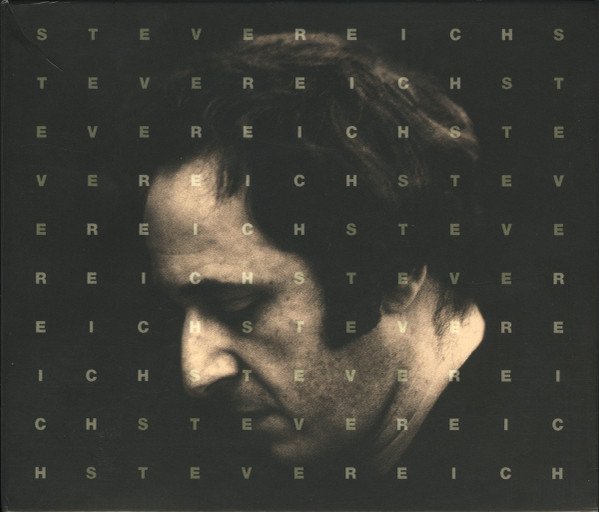

I would be a fool to suggest I was an expert (or even more than moderately knowledgeable) on contemporary classical music. I’m mostly a rock guy. But I have the general impression that Steve Reich’s Music for 18 Musicians is probably the most significant contemporary classical piece of the past several decades, and a landmark in the history of minimalist music.
And there’s plenty more of interest in Reich’s oeuvre than that one piece. More than perhaps any other contemporary classical composer, Reich has been a huge influence on avant-garde rock, art-rock, and prog-rock of the ‘70s forward, and especially on today’s popular electronic music.
Playlist 1: Music for 18 Musicians
If you only hear one piece from Steve Reich, it should probably be the work that is considered his greatest, most significant achievement, Music for 18 Musicians (composed 1974-1976, first recorded and released 1978). Here it is.
Playlist 2: Different Trains
For some, a better place to start might be Reich’s most moving work, Different Trains (composed and released 1988), which bases its melodies on snippets of recorded speech, recordings of different people discussing train journeys. Reich juxtaposes carefree, pre-war train trips across the U.S. with the horror of trains en route to concentration camps during World War II, and concludes with a poignant rebirth at the war’s end. The recording I know of Different Trains also is, to my knowledge, the best of the Kronos Quartet’s work, as well. I’ve capped off Playlist Two with Tehillim (composed 1981), which sets Jewish scriptures to music.
Playlist 3: Early Experiments
Playlist Three takes us back to some of Reich’s early works, many of which featured his experimentations with phasing. Such recordings feature looped tape snippets played back repeatedly and simultaneously at two slightly different speeds, which slowly drift out of phase, creating interesting sonic interference. On the other hand, “Pendulum” (composed 1968) is what is called process music; in this case, the “music” is the feedback created by microphones swinging over the speakers to which they are connected.
Although the material on this playlist has considerable historical importance, and I am very glad to have heard it, I don’t really get into it much. It’s of more academic interest. It is, however, required listening for anyone interested in electronic music and any music that utilizes sampled loops (including anything DJ-driven, like rap music, for instance). The early “Come Out” (1966) uses a sample from Daniel Ham, one of the Harlem Six, who were falsely arrested and beaten by police; “It’s Gonna Rain” (1965) uses the words of African-American street preacher Brother Walter.
Playlist 4: Further Listening
Playlist Four wraps things up nicely with a selection of a few of Reich’s most accessible other works, including a few excerpted pieces. Music For Mallet Instruments, Voices & Electric Organ feels like a small-scale anticipation of what he would later accomplish with Music for 18 Musicians; it might be his most appealing piece. And City Life uses the sampled-speech-driven melody technique of Different Trains, plus the early phasing experiments of “Come Out” and “It’s Gonna Rain,” making it an effective synthesis of many of his techniques.
Cover Art:
- Works 1965-1995: Source, Discogs.com, Fair use.

Recent Comments